
Compare Lamar Property Values
Mississippi starts from true value, a statutory fair-market concept, then applies a class ratio to produce assessed value. The record may split land from improvements. A deed's consideration stands apart as a historic transaction figure.
| Value | What It Is | Where |
|---|---|---|
| True or market value | The assessor's fair-market estimate for the roll | Tax Assessor record |
| Assessed value | True value multiplied by the property's Mississippi class ratio | Assessment roll |
| Taxable value | The amount remaining after applicable treatment or exemption | Tax record, if displayed |
| Last sale or consideration | A past transaction amount, which may not equal market value | Recorded deed or index |
| Land and improvements | Separate components that may sum to the total value | Appraisal card, if displayed |
Dates drive the comparison. A current assessment and an older sale price simply do not measure the same market. Some deeds also record gifts, family transfers, estate work, or partial interests rather than an open-market sale.
Apply Mississippi Assessment Ratios
Mississippi classes owner-occupied single-family residential property as Class I. It is assessed at 10 percent of true value. Other real property falls into Class II at 15 percent. Two parcels can share a true value yet land on different assessed values. The Mississippi Department of Revenue property-tax guidance walks through the formula. Before applying any ratio, confirm the class shown on the actual parcel.
Date the Lamar Value
Lamar County sets values and exemptions effective January 1. Appraisals must be updated at least once every four years. The roll goes to the Board of Supervisors on the first Monday in July. Public inspection and protests follow later in July, ahead of the first Monday in August. That annual timing matters. A later renovation, storm loss, subdivision, or sale may not appear on the same roll. Uploads can trail courthouse activity. Note: Record the tax year and effective date beside every Lamar County property value.
Separate Land From Improvements
Not every result screen populates the full Delta card. When the live record shows land, improvement, total or true, assessed, and taxable values, copy each label on its own line and never treat one figure as another. The official Lamar appraisal form reaches that card by name, address, parcel number, or PPIN.
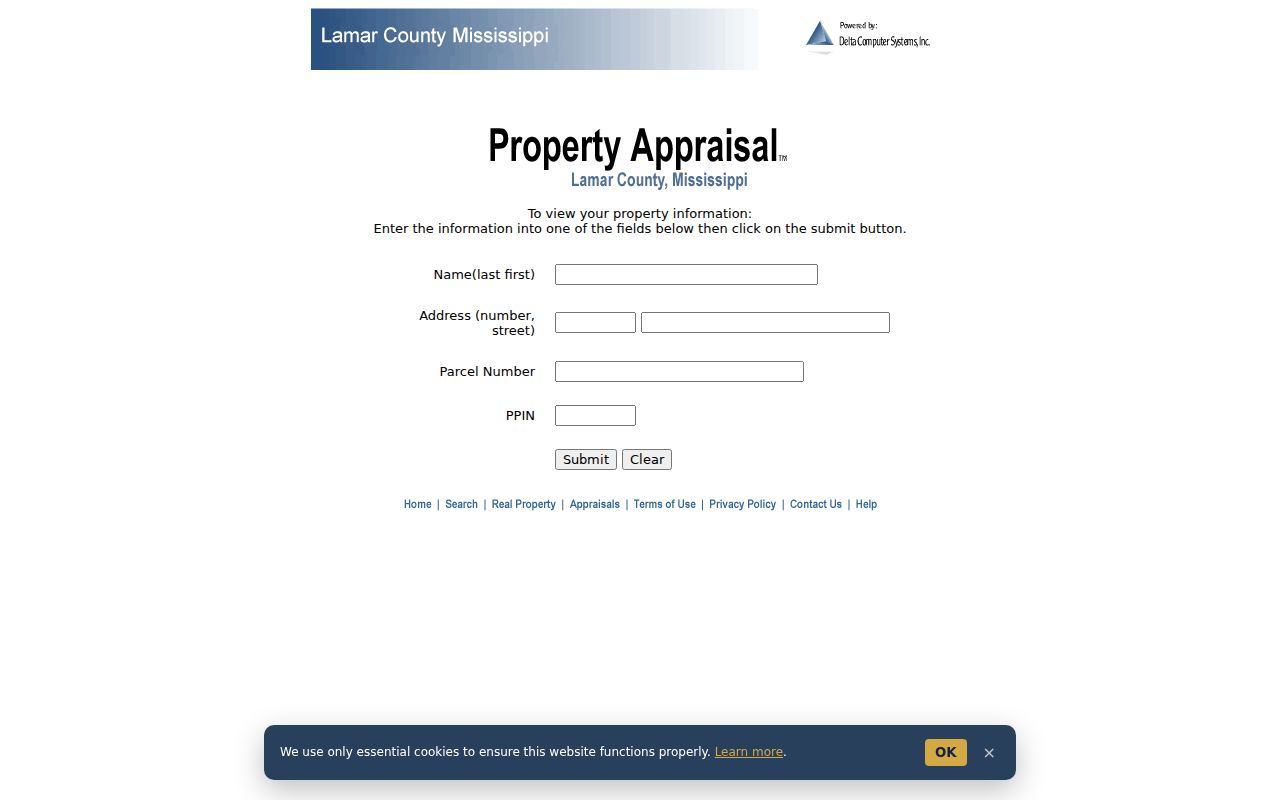
The search shell itself displays no value, so confirm the returned parcel and year before quoting any number. Land value describes the site. Improvement value covers taxable structures or additions reflected by the appraisal.
Read Lamar Sale Consideration
The Chancery official-records index offers consideration search fields and recorded deed details. A sale amount gives a dated market clue. This holds when the transfer was arm's length and covered the same parcel and interest. Read the deed image itself. Check parties, legal description, execution date, and recording date. Nominal or unstated consideration should not pass as a simple market sale. Family conveyances, trustee's deeds, and estate instruments should not either.
Use Lamar Planning Context
Planning packets can explain a property value without stating a price. The 2025 Ashborough file identifies PPIN 10906, RE zoning, residential use, roughly 2.5 acres, 330-foot frontage and depth, two buildings, no flood zone, and flood panel 145E. Those site facts can help interpret a parcel's appraisal. Lamar County Planning also manages subdivision, zoning, site plans, stormwater, floodplain, and inspections. A dated planning fact is context, never an appraisal.
Keep Exemptions Distinct
A homestead exemption can shift the taxable outcome. It does not change what the land might sell for. Mississippi's homestead filing window runs January 1 through April 1. Eligibility hinges on owning and occupying a primary residence on January 1. Treat an exemption flag as supporting evidence only. The state homestead guidance explains the statutory program. Detailed bills and appeals belong with the Lamar County property-tax records rather than the meaning of value itself.
Compare Like Lamar Parcels
A sound comparison holds the date, property class, parcel interest, and physical features steady. A Class I home and a Class II tract can differ in assessed value. This holds even at identical true value. A deed covering only part of a tract should never be matched against the whole tax parcel. Lot size, land use, improvements, subdivision phase, flood context, and access work as record clues. County planning packets may supply these facts when the appraisal card does not. They still do not set a sale price. Recent subdivision and road-acceptance files show Lamar County parcels changing through phases. They also show lot-line adjustments and infrastructure work. Compare the legal description and parcel date before treating an old sale as a match. That habit keeps Lamar County property records comparisons honest.
Verify Lamar Value Offline
When a Delta result comes back blank, stale, or confusing, take the question offline. Contact the Lamar County Tax Assessor/Collector. Have the address, parcel number, PPIN, legal description, and tax year in hand. Ask which true, land, improvement, assessed, taxable, class, and exemption fields apply to that parcel. Never build a value from a guessed label or an undated screen. For a sale comparison, the Chancery record may matter. It can count as much as the assessor's roll. Search the deed index by parcel, PPIN, grantor, grantee, legal description, recording date, or consideration. Pull the image and check whether the transfer covered the whole tract. Confirm the amount reflects a normal open-market sale. The portal itself warns that online indexing can lag. The courthouse index remains the official one.
County planning documents and recorded plats explain physical change. A new phase, replat, lot-line adjustment, road acceptance, or building file can mean an older assessment described different land entirely. A sale record may do the same. Match acreage, lot, block, subdivision, and phase before comparing any values. Finally, keep every figure dated and labeled. Say plainly whether a number is the assessor's true value, an assessed value, or a taxable amount. A recorded consideration needs its stated year too. That habit preserves what the property record actually says. It also keeps an official tax figure from masquerading as a current sale estimate.
Estimate Lamar's Recorded Value
The Delta real-property appraisal search takes a name, address, parcel number, or PPIN. Pull the land record first. Then read the dated fields in the Lamar County property records before trusting any single figure.
- Search by street number and name. If it fails, try parcel number, PPIN, owner, or an old road label.
- Confirm the parcel and legal description. Record the year beside every displayed value.
- Separate true, assessed, taxable, land, and improvement figures rather than copying one total.
- Check the latest relevant deed for consideration, then decide whether that transfer is a valid sale comparison.
- Assessed value
- True value multiplied by the statutory class ratio.
- Market or true value
- The assessor's fair-market estimate for the roll.
- Assessment ratio
- The percentage used to convert true value into assessed value.
- Consideration
- The amount stated for a recorded transfer, which may not be an open-market price.
- Reassessment
- A new appraisal of value; Lamar states a four-year minimum update cycle.
Understand Lamar Value Limits
The assessor runs a countywide valuation process for taxation. That figure is not a market quote. It can diverge from a buyer's offer, a lender's appraisal, an insurance estimate, or a private appraisal prepared for one date and purpose. Market shifts and physical changes to the property can happen between roll dates, so treat each number as a snapshot of its own moment.
Value is not price. A Lamar County assessed value supports taxation. It is not what the parcel must sell for and is not a current, property-specific appraisal.
Use the official value fields to understand the public record, nothing more. For a transaction or a dispute, get the right professional valuation. Give it a clear effective date.
Keep the roll year beside every value copied from the portal. Note the deed's recording date and consideration field too. A recent conveyance can post before the next appraisal update lands. A consideration amount can also reflect terms that are not a normal open-market sale. Exemptions shift the taxable result without touching the assessor's view of true value. Those dates and labels stop unlike numbers from being swapped as direct substitutes.